Showing posts with label Morocco. Show all posts

Wednesday, 16 February 2011

The Hamadchas on Swiss radio

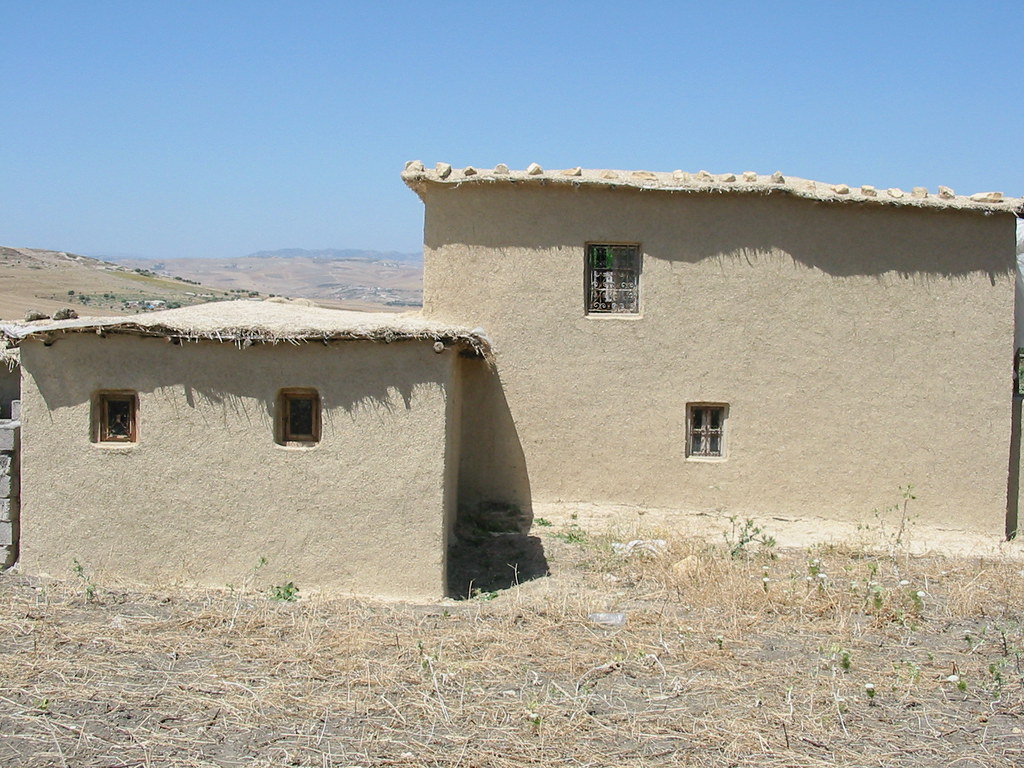
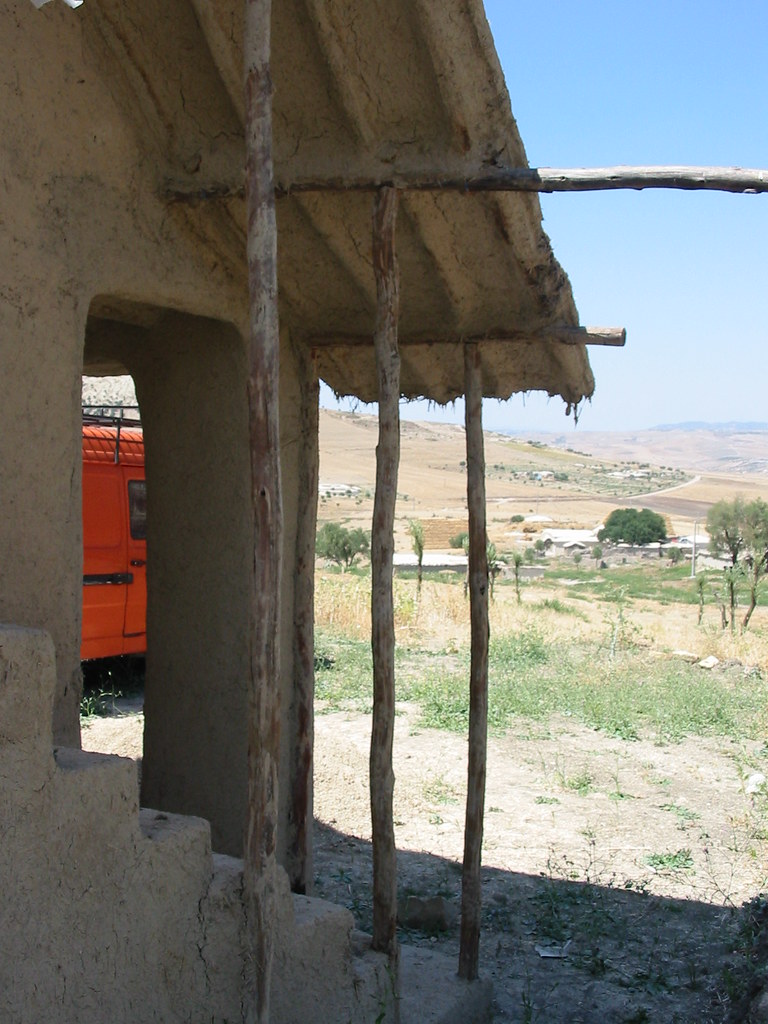
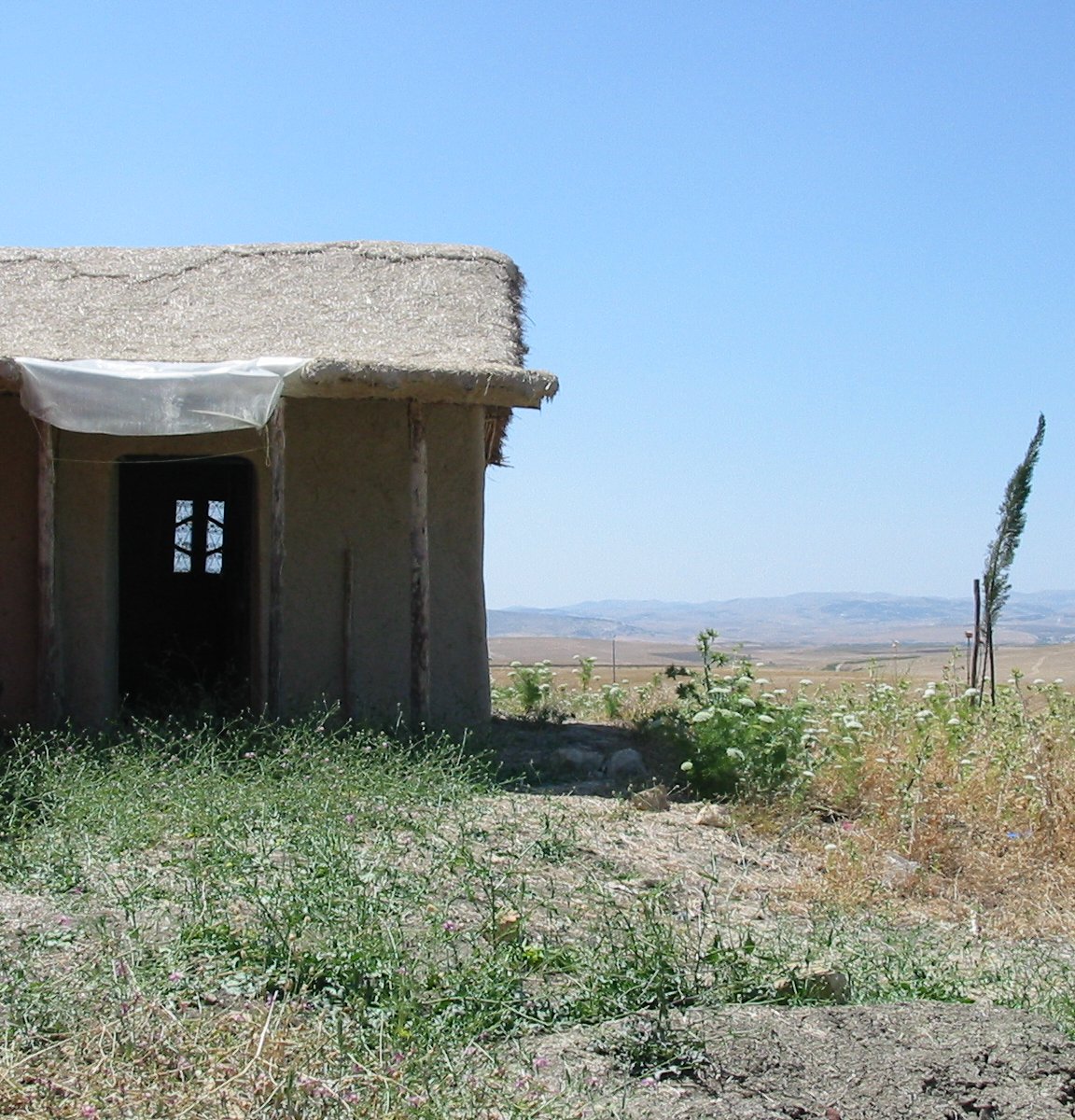
Phew, you'd think this blog has been abandoned. The thing is, I updated my French blog (slightly) more regularly. So, go there to read a recap of the year 2010 by the well, or here to see new pictures of our Moroccan mudbrick house.

I leave you with a wonderful radio program, featuring Fred and the Hamadcha brotherhood. It was made by Vincent Zanetti, from Radio Suisse Romande. It's in French, but there is plenty of beautiful music, so don't hesitate to listen to it : L'écoute des mondes.

image33
Abderrahim Amrani and the young Hamadchas of Fez

Saturday, 30 January 2010

Fred's adventures in Morocco: a tour of Sidi Ali, and a video

Last year, Fred worked on a projet for a big website devoted to the sufi brotherhood he works with, the Hamadcha brotherhood.

We had no news of the website, but we learned a few days ago that it was online - finally.

It's in Arabic, but here are the highlights of the site.

Sidi Ali

First, the virtual tour of the two mausoleums of the most important saints of the brotherhood, in two villages near Meknes. (The wonderful 360 degrees panoramas were made by Sylvain.)
First, you have the mausoleum of Sidi Ali Ben Hamdouch, the founding saint of the Hamadchas.


The other mausoleum is that of Sidi Ahmed Dghoughi, Sidi Ali Ben Hamdouch's follower.


And, when you're done with those great pictures, go see Fred's video on the same website. You'll note his wonderful haircut (I don't know what happened), and also that his name on the url has been somehow hispanicized, from "Calmès" to "Golmez" (I don't what happened either - but after all, Fred's grandfather was from the south of France, so I guess that's close enough).

Sunday, 29 November 2009

No rain in Ouled Mgatel, and a promise

Time passes very slowly in Morocco, december is almost here, and the sun still shines in Ouled Mgatel, and it still hasn't rained.


image5

That's a big relief for us, -we had plenty of time to fix the house - but a bad sign for all our neighbors.

Last year, at this time, we were in the mud and the rain, and we were living in a crappy hotel in Fez.

Now we have a comfortable life here in our apartment in Fez, but we still don't go very often to our mudbrick house (even though we just spent a week-end there with French friends who live in a yurt in France and who thought that our house was a palace).

We'll be back.

image7

(and this is, hopefully, the last picture of our house in that shape... not proud).

image9

Tuesday, 27 October 2009

The Hamadcha of Fez: Transmission of a Precious Heritage

They are between ten and sixteen years-old.
They live in Fez.
Their grand-fathers, and their great-grand-fathers before them were Hamadcha, Moroccan sufis.
Their fathers too.

But their parents never encouraged them to take this road. That is, to become Hamadchas. Because it doesn't pay well, because it's not prestigious.

It was without counting on the passion of one man, Abderrahim Amrani Marrakchi, and on the energy of those kids.


So, are you wearing your djellaba and your babouches? Yes? Let's enter this mysterious house in the medina of Fez.


Un jeune apprenti Hamadcha

And let's get carried away by the music of the Hamadcha. (by the way, I hope you like to dance)


Les apprentis Hamadcha

Les apprentis Hamadcha


image45

Abderrahim Amrani Marrakchi et les enfants

(in case you don't know, Fred has been working with the brotherhood for several years. If you want to know more about it, go on his website).

Friday, 19 June 2009

Two Weeks in a Moroccan Public Hospital: Bachir's Story

Bachir was at the hospital. His mother and Aziz, his friend since he was a child, had managed to get him to Fez.
But there, nothing could be done for him. The doctors were helpless, because they didn't have the equipement to diagnose him. He needed to be transferred to Rabat, the faster the better.
Fred spent the entire afternoon at the hospital, waiting for a vacancy in Rabat.
An ambulance finally came to get Bachir. Aziz was the only one who could stay with him in the vehicule. In poor Moroccan families, men are the ones who accompany the sick. Women stay home, and wait. I can't imagine how hard it must have been for Bachir's mom. She went back to Ouled Tahar, alone. And waited.

We had been told that Rabat public hospital was the biggest hospital of Morocco.
We knew that Rabat was a modern city, much more modern than Fez, a very traditionnal city.
In the car, on our way to the capital, we were hopeful. We were very relieved to leave Fez.
And we pictured the hospital in Rabat bigger than the one in Fez, with more nurses, with better equipement, and more dignity for the patients.

Oh my, were we wrong.

We understood it as soon as we entered the hospital.

 photo : ortizmj12

No nurse, except for a very old man, who just stood there, in the neurological ER – where Aziz had been waiting for us, trying to calm Bachir down, who was delirious with pain.
Only one doctor in the ER – who had to admit the patients, diagnose them, decide what to do with them, and, and, perform surgery on the patients.
No phone in the ER. I mean, no phone for the ER staff – that was a staff of three. The doctor on call, the old nurse, and the « surveillant ». So, when we were told by Hugues, the doctor, that Bachir needed to go to a private hospital to have a echography of his heart, the « surveillant » had to use a payphone outside the hospital.
No pharmacy, and no medication available in the whole hospital. When we got back from the private hospital, at 2 am, after having dismissed the hypothesis of a heart malformation, Bachir was in extreme pain, completely delirious. Since he left Fez, at 4 pm, nobody had given him any painkiller. So Fred had to go, in the middle of the night, in a city we didn’t know, find a pharmacy on call – twice, because the first time the doctor made a mistake in the prescription.

And at 3 am, Bachir was finally admitted in the neurology department.
Where there were no sheets on the beds. No pillows. No doctor.
Moldy walls.
Bachir got a half broken bed – and he was dangerous, in his delirium. He moved a lot, wanted to get off the bed.
The nurse tied him the broken bed with some bandage.
Didn’t give him any medication.
Had to wait for the on call doctor to authorize a sedative injection.
(But he was downstairs, remember, with a dozen patients, and with an operating room to take care of).
So we got angry. Bachir too, in a way. Half an hour later, the insults he was screaming made the nurse give up and she gave him the sedative.

We left Bachir at this point, because there was nothing more that we could do.
The arteriography was scheduled for the next morning.
It almost didn’t happen, because a nurse who fed Bachir with some yogurt when he wasn’t supposed to eat anything for the procedure.
I can’t tell you how much we were angry at this point.
But the doctor told us not to tell anybody about the yogurt. And the arteriography went well.
36 hours after Bachir had the stroke, we finally had a diagnosis – a malformation in his brain had provoked the bleeding. Hugues was optimistic.

The worse in the Moroccan public health system is the solitude.
Nobody comes to you to see if you need something. You just wait, and wait, and wait. To get someone to help you you need to insist and threaten. Most of the people we’ve seen at the hospital are just resigned. A co-worker told me that the patients are afraid of the doctors won’t take care of them if they get angry. Corruption is very strong in Moroccan hospitals – drugs get stolen, some doctor will only perform surgery if you bribe them. The system is very sick.

And you’d better not be alone, or poor, when you have an accident in Morocc.
You can’t get an examination or an operation if you don’t pay first.  In France, the health system is great in comparison. Health insurance is free for those who can't afford it. 
Oh, of course, it’s free to a certain extent too in Morocco. That is, most of the population is considered to be « indigent », and « indigents » don’t pay for consultations or operations. But they still need to pay for the material. And that is very expensive.
So if you have no money, I guess you can just die in the ER.
We were so glad we went to Rabat with Bachir. We payed, he got what he needed.

In Morrocan hospitals, the patients are always accompanied by a family member, who literaly lives by their beds. Since the nurses don’t give medication or wash the patients, families are the real nurses. What would happen to somebody who doesn’t have family ? Or whose family lives far away ?

Aziz spent 17 days at the hospital, in Bachir’s room. He gave Bachir his medication. He kept him clean, walked him to the bathroom, fed him. He held Bachir when he was delirious – most of the nights. He slept in his friend’s bed, because there was nothing else available for him. He bought the medication and talked to the doctors.

Imagine how brave is Aziz. He didn’t sleep much during those two weeks, because of Bachir’s screams and pain. He barely got out of the hospital, except to buy Bachir’s medication and some yogurts. Just try to imagine. The room with four patients, and their sons or fathers. The small bathroom. Bachir screaming all night, waking everybody in the service.


Bachir and Aziz

That makes me so angry. Because everything is not so bad in those hospitals. The machines they use are modern – when you finally get to the point that they , after hours, or days. The rooms are big and bright. But they desperately need some makeover.
The doctors are competent. The nurses too, probably. But they are overwhelmed, lack of everything. Helpless. The budget of public hospitals in Morcco is way too low.

And I know that we didn’t see the darkest side of the system, because we’re French, and that Bachir beneficiated from some kind of affirmative action just because we were with him.

Bachir is getting better and better. It’s incredible, considering how he was just after the stroke. Sometimes though, he looks like a child, is scared of the dark, he who usually is so strong and so brave. We don’t know if he’ll be able to work again.
And. He is absolutely convinced that he spent four months at the hospital.


Wednesday, 6 May 2009

A Mudbrick House in Morocco, and the little treasures of its garden

Our mudbrick house still bears the scars of the flood. All that rain, though, was a good thing for the garden. Spring and the Moroccan sun have brought us little treasures,

fragile little surprises,

colors that heal us of the grayness of Fez.

Of course the boys, who are better gardeners than us, took care of this little piece of land which will soon be the vegetable garden, and planted the fruit trees that had been waiting for months.

And where there’s a treasure, there must be a keeper - the dog Lisa. As always, very faithful, and very hungry.

- If you like our Moroccan countryside, go see the trip Sandy from The View From Fez took in the Rif mountains. Very nice, and amazingly similar to Ouled Mgatel. It's here and here, in the The View From Fez PhotoJournal.

Saturday, 28 February 2009

Yes, I know...

... what it looks like. My blog seems to be stuck in the mud of Ouled Mgatel. It seems there are so few pictures, so few things to tell about our beloved mudbrick house.

And that is true. A little bit.

Because we don’t go there very often now – you know why.

But here, in our appartment in Fez, we’re making plans to conquer back our house.

We’ll paint the walls, fix the roofs, clean the garden, fill in the cracks, redo the floors… Put our hands and feet in the mud again.

(And of course we’re also making plans to earn all the money we’re going to need to paint, fix, clean, redo…)

The house is there, in the valley. Not so far…

Monday, 29 December 2008

Excursion to Ouled Mgatel

Despite the heavy rains, despite our very busy schedule, despite the fact that our car doesn’t like the dirt roads, the mud, the rocks, we had to go back to Ouled Mgatel one last time before going back to France for Christmas.

The main reason was this :


We had to return the cats to their beloved Ouled Emgatel – because they missed so much  Bachir, Fouad, and the thousand insects living in the house and in the garden.


So we put the cats in a box, we put the box in the car, and we left Fez for our country.


We realized that we wouldn’t be able to drive to our house. The road was wet, often covered with mud.


The car was parked on the top of the hill, Fred grabbed the box with the cats inside, and we walked down the path that leads to our house.


And, despite the rain, despite our life that, despite our car, that often grows tired to bring us here, Ouled Mgatel is still generous with us.


Like this path.


And this agave.


This fava bean field.


Those olive trees, that moutain.

And even this fig tree, changed by winter,

and this beautiful empty house

welcomed us, soothed us. 

(Of course, on our way back to Fez, the car got stuck in the mud - but the children of Ouled Mgatel, and their teachers, helped us out.)


Wednesday, 10 December 2008

How it began


How did all of this begin ?

Let me see… I don’t remember very well… It was at least 6 years ago…

There was a boy, Frédéric –you already know him.

And he loved Arabic music. He had studied the ‘ud for many years, and there was even a time when he travelled for 10 hours each Wednesday just to learn it from one of its masters.

And there was the ‘ud master, Marc – you don’t know him, but please, take a look to what he’s done. Fabulous music.

A few decades ago, the ‘ud master was working in the French cooperation, as a teacher, in Morocco. He spent a few years in Fez. Since then he’s travelled in many places, and learned many intruments.

And the student was fascinated by the master. And fascinated by the city : Fez.

And there was a girl, Marie – well, me, obviously.

I loved – and still do – Arabic music too. I even learned to play to ‘ud. Not with the master though, I wasn’t good enough – and anyway he lived too far away from my city.


There were also people in Nancy, our city, friends, Algerians, and Moroccans.

And then there was Nancy, and the « rue Saint Nicolas ». A magical street, with oriental bazaars, Moroccan stores, and Turkish restaurants – well, not so magical, the restaurants...

And the boy had several jobs, but he liked none of them.

And because of all that, he left, one day, with his backpack, for Fez.


And then, for me, there were several trips to Fez – getting to know the city, picturing me living here. I loved this rooftop in the medina.


One day, I left too. I am not a musician like Fred – I am a teacher, and was able to find a job very quickly.

And then, or maybe before, we met Yassin.


He was living in Fez, in the medina. But both his father and his mother were born in Ouled Mgatel. They were cousins – the perfect marriage in Islam. Yassin’s family still lives in Ouled Mgatel – they are our neighbors now.

And one day he brought Fred to Ouled Mgatel. And Fred fell in love with the place.


Me too.

At this point, I could go on for hours. Because the story is still long. You see, we built the house very slowly.

What I just told you... was for us the easy part.